Mills in Alto Aragón

La Puebla de Roda

La Puebla de Roda is a village in the Ribagorza region of Huesca province. It is on the A-1605 from Graus over Capella to Bonansa and the N-260. You should find it on any map.
For the mill: enter the village from the main road (A-1605) where Cajigar is signposted. After only a few steps, take the lower branch to the right which is the Calle del Molino. Stay on this lower street for about 100 m where you will find a narrow path (between the balustrade and the facade of a house) leading down to the site of the mill. Walk about 50 m further on the street and you will reach the aqueduct and recognize the view of (1).

Pictures: 31.xii.2018, 14.x.2021
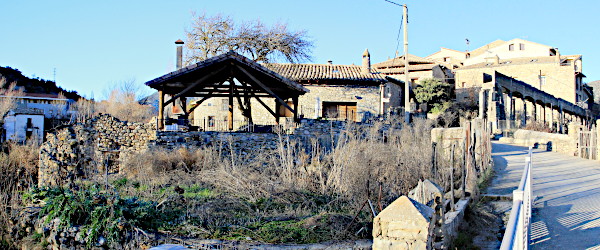
 

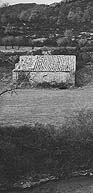
(1) The powerstation (far left) with the aquaduct (right).

This mill is also refered to as the Molino de Rialp after the old name of the village before the 14th century Pobla, or Pueyo, de Rialp . The aqua­duct, which on old maps of the IGN.es is tagged with Acequia Molinar, is named Acequia del Molino de Rialp by the same author.
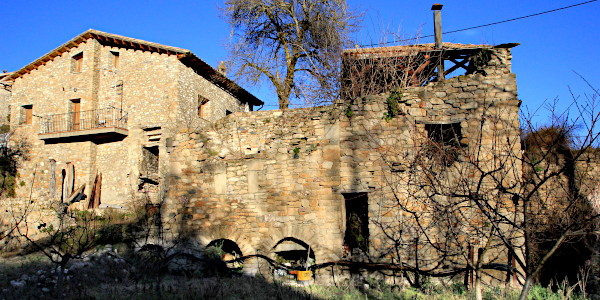
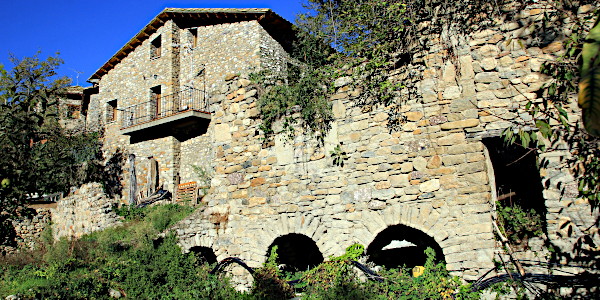
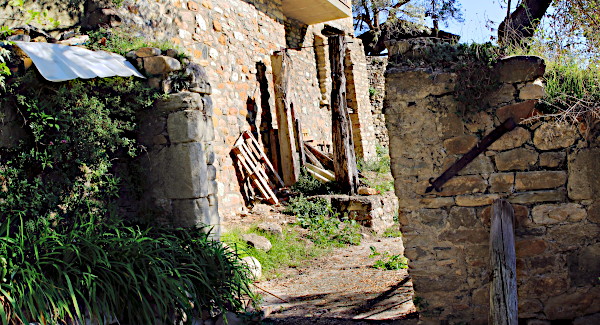
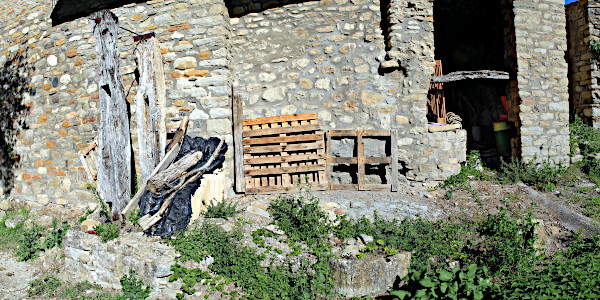
We are dealing with a complex of three parts (oil and grain mill, and power station) that was in very poor condition at the time of our visit (2, 3). In fact, only some of the outer walls are still standing, and almost nothing remains of the contents.

(2) Beams of the oil mill (far left), grain mill (center), and power station (right) — 2018.

The walls show traces of various alterations. See, for example, the blind window above the carcavos. A clear seam is also visible between the central section of the grain mill and the section on the left (2, 3) where the power plant was housed. No effort was made to bond the walls of both together. Only the lintel beam of the entrance is also incorporated into the wall of the grain mill (3).
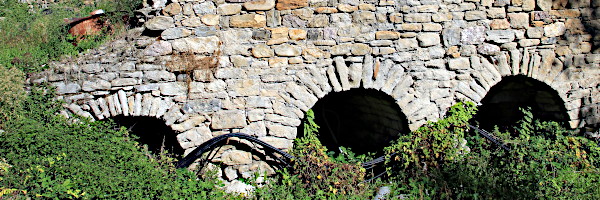
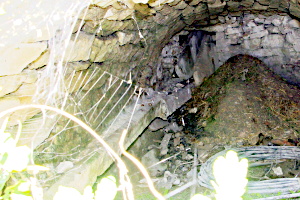
There are three cárcavos (wheelhouses) and the arches of their outlets are not equal. The rightmost mouth (4) has a more pointed arch than the middle one. The arch of the leftmost mouth is wider and lower than the other two. All three wheelhouses are empty. In the left cárcavo (5), a small change has been made: the pressure pipe has been extended with a narrow concrete gutter that drains the water from the cárcavo. The source of this water is unclear.

(3)

(4)

(5) Wheelhouse left in (4).
Above ground there is nothing left to indicate that there was a grain mill in this central section.

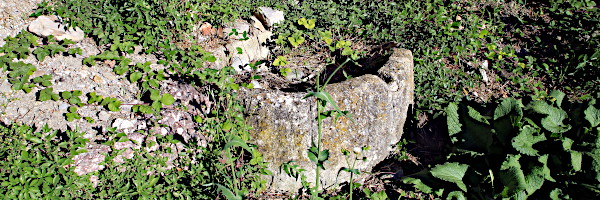
The section left from the grain mill (2, 3) was dedicated to the oil mill. Here (6) is also (one of) the old entrance(s) to the complex. Apart from two eroded beams (virgenes) of a cantilever press and a decanter vessel from stone, no equipment has survived.

(6) Entrance to the oil mill with two of the beams of a cantilever press still standing.

(7) Two beams of the cantilever press with a decanting vessel from stone.

(8) A decanting vessel made from stone.


 Guillermo Tomás Faci — 2012 — La organización del territorio y las dinámicas sociales en Ribagorza durante la gran expansión medieval (1000–1300). Tesis de la Universidad de Zaragoza, Departamento de Historia Medieval: 895pp.
 
See pages 246 (footnote), 561 (photo 34), and 563 (map 43).

Path: Home / Alto Aragón: old watermills / La Puebla de Roda
Introduction
Learn about the parts of a mill
Visit the mills; catalogue
Literature and other websites
© and e-mail: