| Nederlands | ![]() |
|||
![]() |
Mills in Altoaragón - harinero
Villalangua |
|||
|
||||
![]() |
![]() |
||
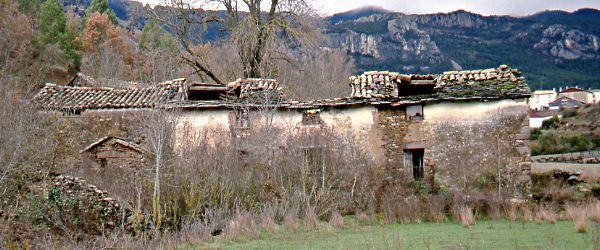
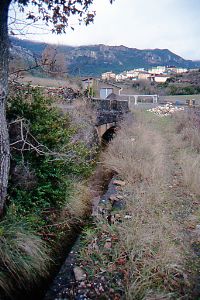
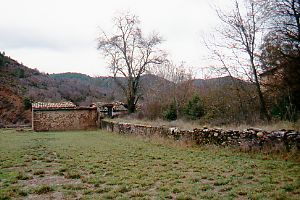
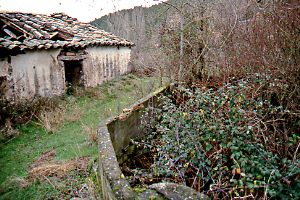
| Front of molino with Villalangua in background | Back-side of molino with embalse |
|---|
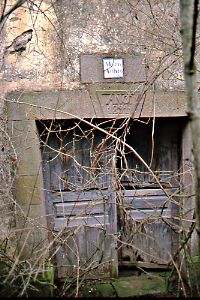
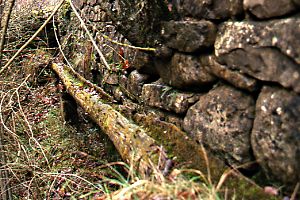
| The mill of Villalangua is big in comparison with most of Aragón's mills. The molinero had his quarters on the floor above the mill proper. (Similar to f.e. Centenera and Fosado) The entrance to the work-place is at ground-level in the middle front side, now hidden behind the shrub. The living-quarters were reached from the back-side of the top-floor where the embalse is. | The water was contained between very thick walls of a large embalse. The reservoir was rather shallow and nowhere deeper than two metres. The canal comes from near the village and is still used to water the vegetable gardens next to the mill. Go down into the embalse and find out how the last stretch is bridged over by a hollow tree. (Other primitive piping in Samper) |
![]() |
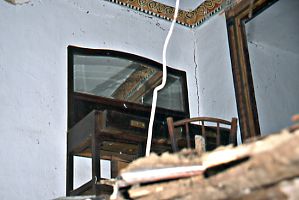
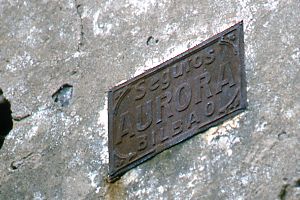
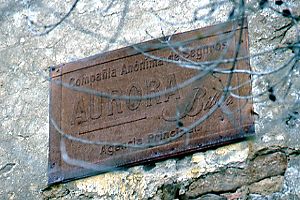
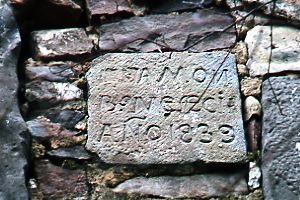
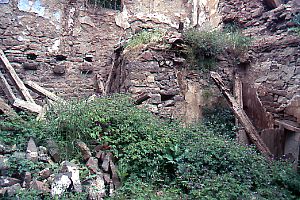
The roof already gave up and soon the furniture on the top-floor will rot away. The work-place will go next as the sad end of a story starting in 1839. The many enamel plates of the Aurora insurance from Bilbao won't give any assistance now. (pictures down page) | ||
| The mill was abandoned furniture left behind. |
|---|
| Overview of the workplace | |||
|---|---|---|---|
|
The groundfloor is devoted to the mill and
related activities.
Passing through the front door we enter in a spacious room.
A door to the right brings us into the bakery. There is an oven
and several recipients related with the profession.
A double door to the left opens
into the harinero.
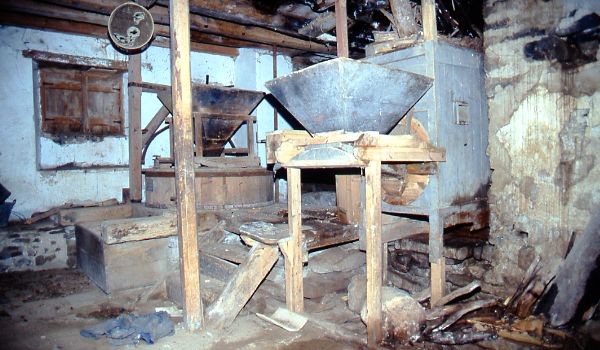
The place is in good working order. You would
any moment expect the molinero materialising from behind the
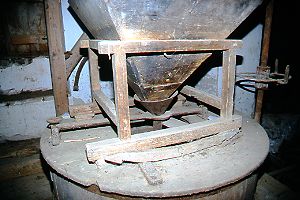
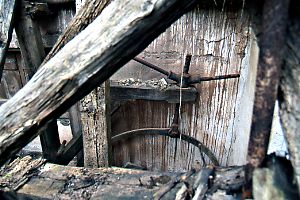
machinery. The place houses only one production unit (rather unusual for a mill of this size). A closer look to the parts under the hood reveals a very peculiar construction. The arbol (the vertical axis moving the stone) connects with a horizontal axis with wheel. A belt brings the movement to the prominent contraption with hopper (el torno). So two engines are powered by only one rodete! |
![]() |
||
![]() |
![]() |
This torno is a handy machine isolating the flour in several fractions from the bran. The mill in Yésero had two tornos. One was driven by the turbine of the power-station. The other needed muscle-power as was always the case when we found the tool in a bakery. | ||
![]() |
![]() |
||
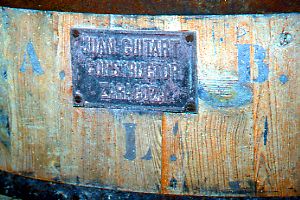
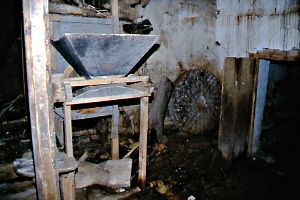
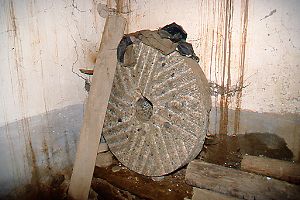
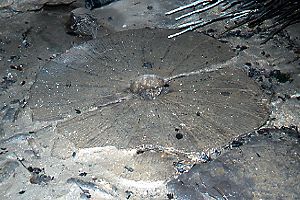
| On both sides of the entrance a fresh stone is waiting for his turn. The ridges tell us that we are looking at modern mill-stones composed from different smaller parts. Several older stones form the floor of the work-place. Find examples of older stones in Sarvisé and Allué. Compare the pattern of the ridges. | The guardapolvo features
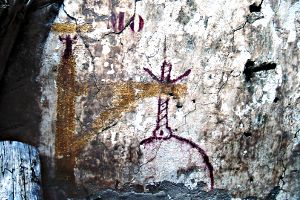
a label Juan Guitart - Constructor - Zaragoza and three enigmatic characters A - B - L |
![]() |
![]() |
||
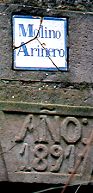
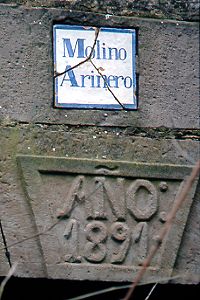
| The façade carries two dates. The stone above the entrance says 1891 (top of page). The second marking says Ramon B° me fecia Año 1839 | Seguros AURORA Bilbao
One of the plates advertising for the insurance company. Another plate says Compañia Anonima de Seguros Aurora Bilbao - Agencia principal |
|
Introduction Learn about the parts of a mill Visit the mills Read more about mills; links © and e-mail: |
||
| Next stop on the harinero
trail |