Mills in Altoaragón - harinero

Chimillas


Chimillas lies a bit north of the city of Huesca. From Huesca take the road to Pamplona via Puenta la Reina de Jaca. Chimillas is sign-posted. As we were kindly brought to the mill by the owners of the Molino de Morana I can't give very precise directions. Try to find the Alberca de Cortés situated south of the village. The mill, also known as the Molino de Cortés, is nearby. The construction is now a second residence for people from Huesca. We were shown around by the owners, proud with reason because the mill is marvellously restorated.

Pictures: 29.XII.2002


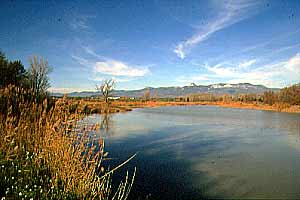
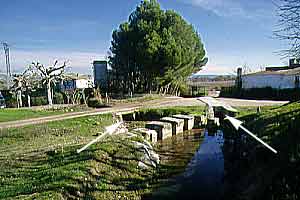
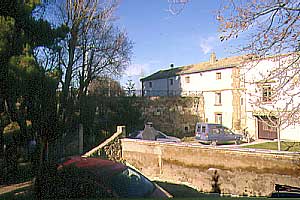
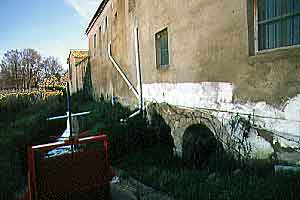
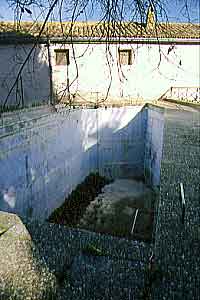
  The Alberca de Cortés is a huge pond now providing water for irrigation. A channel starts at the base of the dam and then brings life first to the Molino de Cortés and then to the Molino de Morana lying some kilometers further down close to Huesca.   The channel in its first meters splits. One branch (left on the picture) directly feeds the main channel. The other branch brings water to the storage of the mill. The reservoir rests against the façade of the mill, reaches two floors high and thus can contain quite some amount of water.


front of the mill with
the wall of the embalse two storeys high
back-wall with two cárcavos and
valve on the main waterchannel
 
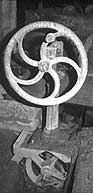
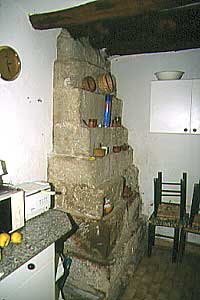
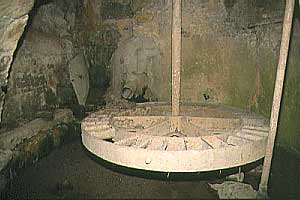
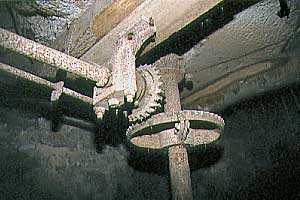
  The farthest corner of the embalse protrudes into the kitchen of the house. I wonder if that is because of miscalculation or by purpose (to cool the place ?).   The back-wall opens with a pair of cárcavos. One of them is empty since before the present owners can tell. The other cárcavo houses a metallic rueda and a couple of cog-wheels which probably powered the bolting and sifting machinery usually available in a mill this size (e.g. Villalangua).
 
 
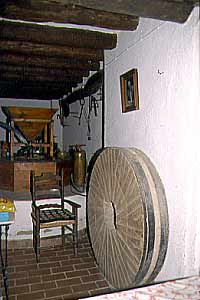
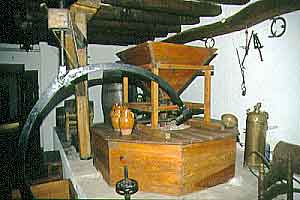
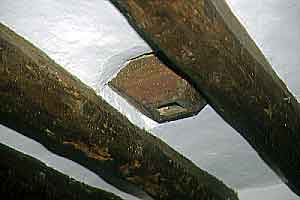
  The workplace sensu strictu is kept as it was. There was only one pair of stones (fits with the one cárcavo) clad with an octagonal dust-cover (guardapolvo). We recognize also the tolva (hopper) and the grua with cabra : the crane to lift the stones when they needed to be dressed. The farinal where the fresh meal was collected is also just visible in the left corner.   A funnel leads through the ceiling. As the mill is built in the valley of the Río Isuela, the top floor is level with the old roads running on the higher ground. Corn was delivered at the top floor. There below was a waiting room and when corn was needed it could easily be funneled down to the grinding stones.
 
 
workfloor with grua,
regulador, tolva, guardapolvo
funnel brings corn from the
waiting storage down to the workfloor
 
 
metallic rueda cog-wheels
 
  Find other mills converted to holiday residence in Allué, Yebra de Basa
 
Introduction 
Learn about the parts of a mill 
Visit the mills 
Read more about mills 
© and e-mail:

Path: Home / Altoaragón: old mills